PCB Surface Finish Selection DFM Checklist: A Practical Guide for PCBA Manufacturing
Choosing the right PCB surface finish is not just a design decision—it is a manufacturing strategy.
From a PCBA perspective, the wrong surface finish can lead to soldering defects, yield loss, and reliability risks, even when the PCB layout itself is correct.
Why Surface Finish Selection Requires a DFM Approach
In PCBA manufacturing, surface finish directly affects:
- Solder wetting behavior
- SMT process window
- Multi-reflow stability
- Storage and logistics tolerance
A DFM-based selection ensures that the surface finish:
- Matches assembly complexity
- Aligns with production scale
- Supports long-term product reliability
👉 For high-precision and mass-production projects, surface finish selection must be reviewed as part of DFM—not treated as a cosmetic option.
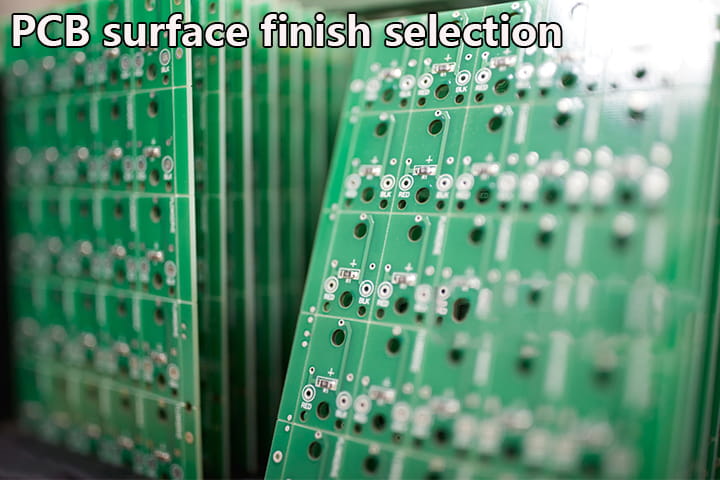
PCB Surface Finish DFM Checklist
1️⃣ Assembly Density and Component Type
Checklist Questions
Does the design include BGA, QFN, LGA, or fine-pitch components?
Is component spacing tight or highly congested?
DFM Guidance
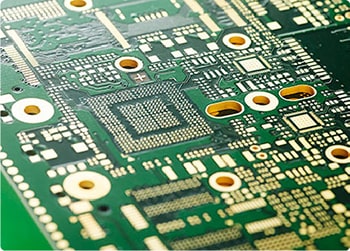
High-density layouts benefit from ENIG due to superior flatness
Medium-density designs may consider immersion silver
Low-density, standard SMT may allow OSP
👉 Related reading:
ENIG Surface Finish in PCBA: When Is ENIG the Best Choice?
2️⃣ Number of Reflow Cycles
Checklist Questions
Is the board subject to multiple reflow passes?
Are there secondary assembly or selective soldering steps?
DFM Guidance
ENIG performs best under multiple thermal cycles
Immersion silver is acceptable with controlled reflow
OSP is suitable mainly for single-pass reflow
👉 Related reading:
OSP Surface Finish in PCBA: Cost Advantages and Manufacturing Limitations
3️⃣ Storage and Logistics Conditions
Checklist Questions
Will PCBs be stored for extended periods?
Is shipping time long or environment difficult to control?
DFM Guidance
ENIG offers the longest shelf life
Immersion silver requires controlled packaging
OSP demands short storage-to-assembly intervals
Storage-related failures often appear as solderability issues during SMT.
4️⃣ Manufacturing Yield and Process Window
Checklist Questions
Is high first-pass yield a priority?
Is the SMT process window tight or forgiving?
DFM Guidance
ENIG provides the widest process margin
Immersion silver requires tighter control
OSP leaves little tolerance for variation
For high-mix or high-reliability projects, process margin is critical.
5️⃣ Reliability and Product Lifecycle Expectations
Checklist Questions
Is the product intended for industrial, automotive, or medical use?
Are long service life and field reliability critical?
DFM Guidance
High-reliability products typically specify ENIG
Consumer or short-lifecycle products may accept OSP
👉 Related reading:
Immersion Silver Surface Finish for PCBA: Benefits, Risks, and Best Applications
6️⃣ Cost Evaluation: Unit Price vs Total Manufacturing Cost
Checklist Questions
Is the project optimized for lowest PCB cost or lowest total cost?
What is the cost of rework, scrap, or yield loss?
DFM Guidance
ENIG has higher PCB cost but often lowers total manufacturing cost
OSP minimizes upfront cost but increases process risk
Immersion silver balances cost and performance
👉 DFM focuses on total cost of ownership, not just PCB unit price.
Quick DFM Comparison Table
DFM Factor ENIG Immersion Silver OSP
Assembly Density Very High Medium–High Low
Multi-Reflow Stability Excellent Moderate Poor
Shelf Life Long Medium Short
SMT Process Window Wide Medium Narrow
Manufacturing Risk Low Medium High
Unit PCB Cost High Medium Low
How to Use This Checklist in Real Projects
For best results:
Apply this checklist during design review, not after PCB fabrication
Review surface finish choice together with PCB and PCBA suppliers
Re-evaluate surface finish when moving from prototype to mass production
👉 Many production issues originate from surface finish decisions made too early and reviewed too late.
There is no universally “best” PCB surface finish.
However, there is a best choice for each manufacturing scenario.
A DFM-driven surface finish selection:
Improves PCBA yield
Reduces production risk
Supports long-term product reliability
For projects targeting stable mass production and high reliability, this checklist provides a practical framework for informed decision-making.

 poe@pcbamake.com