poe@pcbamake.com


Many engineers and sourcing managers ask:
What are the real manufacturing differences between 8-layer, 12-layer, and 20-layer high precision PCBs?
The answer is simple:As layer count increases, manufacturing complexity rises exponentially — not linearly.
It is about lamination strategy, alignment accuracy, via structure, impedance control, and long-term reliability.
Let’s break down the real differences.
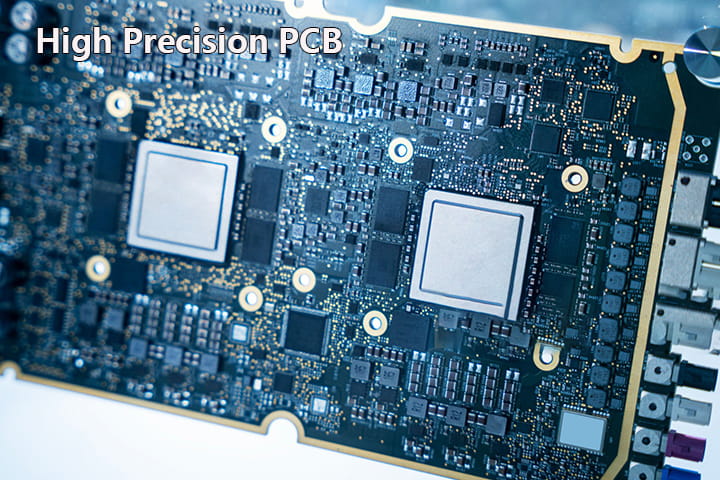
1. 8-Layer PCB: Mature but Already Precision Manufacturing
Typical Applications
Industrial control boards
Power management modules
Communication sub-boards
Mid-to-high-end electronic systems
Manufacturing Characteristics
Single lamination cycle
Mechanical drilling
Aspect ratio typically ≤ 8:1
Controlled impedance structures
At this stage, precision is already critical when designs include:
4/4 mil trace/space or below
Multiple impedance groups
Dense BGA layouts
Even for 8-layer boards, stable inner-layer registration and lamination profile control are essential.
For manufacturers without solid multilayer experience, risks may include:
Layer misalignment
Impedance deviation
Drill breakout
2. 12-Layer PCB: The Gateway to High-End Multilayer Manufacturing
When moving to 12 layers, manufacturing difficulty increases significantly.
2.1 More Complex Lamination Structures
Possible double lamination cycles
Buried via sub-structures
Increased cumulative alignment tolerance
Each additional lamination introduces:
Thermal expansion control challenges
Thickness tolerance variation
Registration stacking error risks
2.2 Higher Drilling and Plating Requirements
Increased aspect ratio
Higher copper thickness uniformity requirements
Greater via reliability expectations
Poor plating control may lead to:
Barrel cracking
Long-term thermal fatigue failure
2.3 Tighter Reliability Standards
12-layer boards used in high-reliability sectors often must comply with:
IPC-6012 qualification requirements and IPC-A-610 workmanship standards
This is no longer only a production issue — it becomes a system-level reliability concern.
3. 20-Layer PCB: Sequential Lamination + HDI + High-Speed Material Expertise
When layer count reaches 20 or above, manufacturing enters the high-end domain.
Typical Applications
Server motherboards
AI computing modules
High-speed networking equipment
Medical imaging systems
3.1 Sequential Lamination
20-layer boards typically require:
3–4 lamination cycles
Buried via sub-core fabrication
Laser-drilled microvias
Via filling and planarization
Each lamination cycle introduces:
Accumulated thermal stress
Increased registration complexity
Reduced overall yield
This requires advanced lamination equipment and highly controlled process windows.
3.2 Laser Microvias and Via Filling
Common structures include:
HDI stacked microvias
Resin plugging
Copper-filled microvias
Improper control may result in:
BGA voiding
Reliability failure
Delamination during thermal cycling
3.3 High-Speed / Low-Loss Materials
High-layer server boards often use advanced materials such as:
Rogers Corporation high-frequency laminates
Panasonic Megtron series materials
These materials demand:
Precise lamination temperature profiles
Specialized drilling parameters
Accurate impedance verification
Without high-speed material processing experience, impedance stability and layer reliability cannot be guaranteed.
4. Capability Comparison: 8L vs 12L vs 20L
| Parameter | 8-Layer | 12-Layer | 20-Layer |
| Lamination Cycles | 1 | 1-2 | 2-3 |
| Sequential Lamination | No | Possible | Required |
| HDI Structure | Rare | Partial | Common |
| Laser Microvias | Limited | Moderate | Extensive |
| High-Speed Materials | Rare | Sometimes | Common |
| Yield Stability | High | Medium | Lower |
| Manufacturing Barrier | Medium | High | Very High |
5. Why High-Layer PCBs Require an Experienced Manufacturer
Functional testing
A one-stop PCB + SMT solution reduces:
Lead time
Supply chain risk
Communication cost
Overall project uncertainty
Final Thoughts
8-layer boards represent solid multilayer capability.
12-layer boards mark entry into high-end manufacturing.
20-layer boards reflect full process-system strength.
If your project involves:
High-speed signal design
Server or AI systems
Industrial control platforms
Medical-grade electronics
Early DFM communication with an experienced engineering team is critical.
Proper stack-up planning, aspect ratio control, and lamination strategy can significantly improve yield and long-term reliability.
If you have PCB/PCBA/OEM/ODM needs, please contact us, We will reply within 2 hours, and complete the quotation within 4 hours or less upon request.
Delivery Services

Verified by

Link Us on